
Thursday, Jan 15, 2026
  • ELECTRIC VEHICLES
  • CLIMATE CHANGE EFFECTS
  • CLIMATE CHANGE IMPACT
  • ELECTRIC CARS
Search
MacroEdition

Champion Free Press

Support us to run this helpful website daily!

  • Home
  • Electric Vehicles
  • Environment
Reading: Global warming caused record Arctic heatwaves, melting Greenland’s ice sheets fast.
Explore by Topics
Subscribe
MacroEditionMacroEdition
Font ResizerAa
  • Home
  • Electric Vehicles
  • Environment
Search
  • About
  • Contact
  • Privacy Policy
  • Terms and Conditions
Follow US
© 2026 MacroEdition. News for All, Rights Reserved.
Home - Global warming caused record Arctic heatwaves, melting Greenland’s ice sheets fast.
Environment

Global warming caused record Arctic heatwaves, melting Greenland’s ice sheets fast.

Greenland's ice sheet melted 17 times faster in May 2025, accelerating global warming and sea level rise risks.

Chandra Mouli
Last updated: June 13, 2025 8:36 am
By Chandra Mouli
3 Min Read
Share
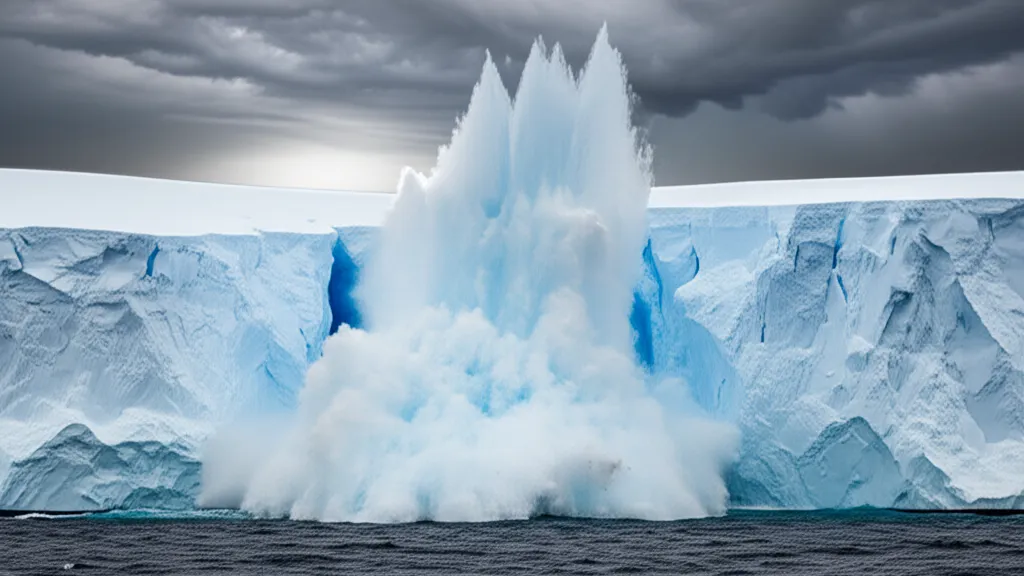
Huge iceberg breaking off Antarctic ice sheet under stormy sky during calving process
A dramatic digital photo captures a huge iceberg breaking away from the Antarctic ice sheet amid stormy skies, highlighting climate change impacts.
SHARE
Headlines
Understanding This Temperature CrisisHow Scientists Measure This CrisisWhat These Numbers Really MeanWhy This Matters for Your Future

Have you ever wondered what happens when the world’s largest ice sheet starts melting at lightning speed? Right now, something extraordinary and alarming is happening in Greenland that affects every person on Earth.

According to recent reports from HindustanTimes, Copernicus Climate Change Service, and World Weather Attribution, scientists have discovered that Greenland’s massive ice sheet melted seventeen times faster than normal during May 2025.

Understanding This Temperature Crisis

The numbers tell a shocking story about our changing planet. May 2025 became the second-warmest May ever recorded globally, with temperatures reaching 1.4 degrees Celsius above pre-industrial levels.

To understand this better, think of pre-industrial times as the baseline temperature before humans started burning large amounts of coal and oil. Scientists from World Weather Attribution found that human activities made this Arctic heatwave three degrees hotter than it would have been naturally.

What makes this particularly concerning is that we’ve now experienced 21 consecutive months where global temperatures exceeded the critical 1.5-degree warming threshold. This threshold represents a dangerous tipping point that climate scientists have warned about for years.

How Scientists Measure This Crisis

You might wonder how researchers can accurately track ice melting from space. Here’s how they do it using multiple sophisticated methods:

  • Gravity measurements: NASA’s GRACE-FO satellites work like cosmic scales, detecting how Earth’s gravitational pull weakens when ice disappears. When massive amounts of ice melt, the area literally becomes less heavy.
  • Height tracking: ESA’s CryoSat and NASA’s ICESat-2 satellites act like extremely precise rulers in space, measuring how the ice sheet’s surface drops as melting occurs.
  • Daily comparisons: Scientists compare current melt rates to a 30-year average from 1981-2010, helping them identify unusual melting patterns immediately.

What These Numbers Really Mean

Temperature RecordWhat This Means for You
May 2025: 15.796°C averageThis represents unprecedented global warming affecting weather patterns worldwide
1.4°C above pre-industrial levelsWe’re approaching dangerous climate thresholds faster than expected
Only 0.12°C cooler than May 2024Temperature records keep breaking year after year, showing accelerating change

Why This Matters for Your Future

This accelerated ice melting doesn’t just affect polar bears or distant Arctic communities. When Greenland’s ice sheet melts rapidly, it raises sea levels globally, threatening coastal cities where millions live. Additionally, these extreme temperature changes can disrupt monsoon patterns, affecting agriculture and water supplies across Asia, including India.

Looking ahead, scientists warn that if global warming reaches 2.6 degrees Celsius, similar heat events could become two degrees more intense. This means what we’re experiencing now might seem mild compared to future extremes. The question isn’t whether climate change is real, but how quickly we can adapt to these rapidly changing conditions.

TAGGED:CLIMATE CHANGE EFFECTSGLOBAL WARMINGGREENLAND ICE SHEET
SOURCES:Hindustantimes
Share This Article
Facebook Threads Copy Link
Chandra Mouli
ByChandra Mouli
Editor
Follow:
Hi, I’m Chandra Mouli, founder of TheMacroEdition—where I simplify news using clear, conversational English, making it easy and enjoyable for everyone to stay informed.
Previous Article Urban apartment building with balconies, air conditioning units, orange-brown walls Indian government announces new AC temperature rules and aims for development by 2047.
Next Article City skyline at sunset with storm clouds and glowing buildings in India. Climate change will cause more extreme heat and heavy rains in India by 2030.

Follow US

FacebookLike
XFollow
InstagramFollow
ThreadsFollow
BlueskyFollow

Must Read

Large flame erupting from the ocean during a volcanic eruption with smoke and dark waves.

Melting Glaciers May Cause More Volcano Eruptions, Scientists Warn

Golden wheat field at sunset with hills in background

Heat Exposure Spike in Tamil Nadu Linked to Urban Growth and Land Change

RML Group VarEVolt battery pack powering electric hypercars

A New Battery Can Fully Charge in 18 Seconds, Making Electric Cars Faster and Better!

City skyline at sunset with storm clouds and glowing buildings in India.

Climate change will cause more extreme heat and heavy rains in India by 2030.

Urban apartment building with balconies, air conditioning units, orange-brown walls

Indian government announces new AC temperature rules and aims for development by 2047.

You Might Also Like

Dried soil with gray stones on white sand during a sunny heatwave.
Environment

Extreme Heat Wave Hits 50°C in Asia as UK Faces Growing Climate Risks

5 Min Read
Large solar panels in a vast farm at sunrise capturing sunlight for renewable energy.
Environment

Odisha Sets Ambitious Green Targets: Solar Panels on All Government Buildings & 10,960 MW Renewable Energy by 2030

6 Min Read
Aerial view of a misty green rainforest with dense trees and mystical fog.
Environment

India Unveils Draft Climate Finance Taxonomy to Boost Sustainable Investments by 2070

5 Min Read
Fighter jet on aircraft carrier deck at sunset with vibrant orange sky.
Environment

Climate Warfare: The Global Environmental Impact of Recent Conflicts in Ukraine, Gaza, and India-Pakistan

6 Min Read

Subscribe Newsletter

Subscribe to our newsletter to get our newest summarized articles instantly!

About US

News that’s easy to read and fun to follow. At MacroEdition, we keep it simple so everyone — from kids to seniors — can stay informed without the fuss.

  • Environment
  • Food
  • Electric Vehicles
  • Health

© 2025 MacroEdition. News for All, Rights Reserved.

More Links

  • About
  • Contact
  • Terms and Conditions
  • Privacy Policy
  • Editorial Policy
Subscribe Newsletter
  • Weekly Stories
  • Trending Alerts
  • Summaries
Subscribe to our newsletter to get our newest summarized articles instantly!

Welcome Back!

Sign in to your account

Username or Email Address
Password

Lost your password?